Sunday, February 1, 2015

Is it Really a "Man's Job"?

As we continued to study the social reform movements of the 19th century, it was only right to study the Woman's Reform movement that occurred in the mid-19th century. Gender equality between men and women has always been a leading issue from as far back as society can recall. Woman's rights is one of the most discussed topics and many people around the world have differing viewpoints about equality for all. Even though the Woman's reform was the last reform we discussed in class, it is certainly not the least important. In order to aide our understanding of the reform, my teacher provided many documents as well as photos for us to analyze. Most of the documents were primary source documents, which especially gave us a better understanding of how men viewed women during the 1800s. One of the documents in which we analyzed is known as The Rights of Woman: Laws and Practices. In this document, the way that women were viewed and the laws they had to follow are clear. The document covers all women's rights from divorce to voting. Additionally, woman were not allowed to speak in public, own property, attend school, go to school, take the children away from the mother in the event of a death , and it was even legal for men to beat their wives. Not only this, but women were expected to do al the cleaning, housework, cooking, and take care of the children with little help from their spouses.  These are only a few of the rights of woman, as there are many more that stand out to be irrational and immoral. To left, a photo of this document is shown.

Although there were many negative rights regarding women in the 1800s, there was also a movement that took place that aimed to support the rights of woman known as the Seneca Falls Convention. In response to this convention there were supportive and some negative opinions. It was through this movement that woman realized that they decided much more than they were getting. The Seneca Falls Convention took place in New York and was an abolitionist movement. A large amount of the reactions to the Seneca falls voiced how Woman's equality to men went against the bible and what was morally right. In an excerpt from The Mechanics Advocate, Female Department, there is a portion which directly discusses Adam and Eve and why woman should never be seen as equal to men. One being that Adam was born before eve, which some people believe justifies why women should not be considered equal. This article basically says that even the idea of women and men being equal is not only wrong but immoral as well.

In reaction to the Seneca Falls, although there were many unsupportive opinions regarding the women's fight for equality, there were also a select few of articles that supported the movement. On July 28th, 1848, The North Star, a newspaper article in response to the Seneca Falls Convention was written. However, instead of simply degrading the rights and privilege's of women, the article instead gave a different, more supportive input. Basically, this excerpt explains that every political right and right in general that man obtains, should be available to women as well. Both men and women are intelligent beings and both should be viewed that way. Women are entitled to everything that men are entitled to. All people should have equal opportunities, whether the opportunity is viewed as "manly". Unlike the article above , The North Star (to the left) supports women and their rights.

 
Because the 1800s was a few hundred years ago, it is important to evaluate society's view of women today. Is it different than  the 19th century? Is it the same? These are some of the toughest questions since there are thousands of different opinions regarding this topic. Personally, I believe that there is still gender inequality everywhere. Sadly, the world is not perfect and in many countries there are still recurring issues regarding the equality of men and women. There are still countless men who look down upon women for doing simple daily tasks that they believe are a "man's job". In some places, this topic is largely discussed, but for others its hardly mentioned. But just because it isn't talked about doesn't mean that it isn't a growing problem. Additionally, many women are scared to speak up for themselves in fear that they will be shamed or looked at differently. Everyday on the news, there are stories about inequality regarding ethnicity, skin color, and gender. Although sad, I believe that even if the world works hard to put an end to gender discrimination, there will always be people who don't agree. Below, I have provided a short video clip that depicts men and woman doing the same thing but being perceived differently.

https://www.youtube.com/watch?v=-K2kfgW7708

Citations:
1.The Rights of Women: Laws and Practices. Seneca Falls. 1848
2. Tanner, John. Female Department- Women Out of Their Latitude. The Mechanics Advocate. American Treasures of the Library of Congress
3.The Rights of Women. The North Star. American Treasures of the Library of Congress.


Monday, January 12, 2015

Nature and the Soul in Harmony: Transcendentalism

During the !9th Century, there were a select few of individuals who were solely interested in transcendentalism. Specifically, Ralph Waldo Emerson, a leader in the transcendentalist movement, wrote a book focused on the main principles of transcendentalism. Nature, Emerson's book, has been recognized as a major document in American Romanticism and Transcendentalism. Nature is one of the most well-known works of the 1800s and gives a deep insight of Emerson's beliefs and how nature effects one's soul. Because the chapter which I am going to focus on is very long, I chose to select just a couple paragraphs of the chapter to mainly focus on. The first chapter is called "Nature" which is one of the main tenets of transcendentalism. Below, I have provided an annotation of the few paragraphs and a photo of  Emerson's writing as well.

As Emerson was a leader of the transcendentalist movement, it is clear that he believed that the movement was a positive one and he wanted people to break away from society and be in touch with the natural world around them. Emerson explains that if an individual were to retire from all an any distractions, then he would be able to be more in touch with himself and would be more in harmony with nature. In these first few paragraphs of the chapter, Emerson explains his views on how nature is a beautiful thing and should never be taken for granted. After reading Emerson's essay, it is clear that he wants others to consider his transcendentalist thoughts and become more appreciative of the wild, rather than focusing only on material things. Seeing as this excerpt from is from Emerson's book, it is evident that these are his own thoughts and that he is simply explaining what he personally believes. Therefore, the excerpt is trustworthy in that sense, however transcendentalism is such a philosophical movement that everyone will and does have different opinions regarding Emerson's beliefs. In some cases, Emerson's book is controversial to some.  Nature was published in the fall of 1836 (anonymously) and gives an insight of the foundation of transcendentalism. The 19th century was the height of literary and romanticism in Europe and America. Transcendentalism, inspired by English and European Romantic authors, was a form of American Romanticism. Through reading this document, it is clear that transcendentalism was an interesting and different way to view the world. Instead of viewing nature in its literal sense, Emerson dives deeper into how nature, man, and god all connect. The paragraphs which are shown below give a good picture of transcendentalism and are a good introduction into Emerson's  thoughts and teachings. However, these few paragraphs don't necessarily give a complete picture of the event. Along with transcendentalism, there are many topics that Emerson touches upon. This includes, Nature, Commodity, Beauty, Language, and Discipline. So, although this small portion gives a lot of insight, there is much more to the transcendentalism movement. In the first chapter, Ralph Waldo Emerson says, "To go into solitude, a man needs to retire as much from his chamber as from society." In Emerson's opinion, an individuals must break away from society in order to really known themselves and have a relationship with nature on a more spiritual level. Emerson describes true solitude as going out into nature and leaving behind all  activities as well as society. This is merely just Emerson's opinion, and not everyone necessarily believes it. Also, Emerson explains, "Nature never wears a mean appearance". In his opinion, Nature is always beautiful and he goes on to say that society tends to take the beauty of the world/nature for granted. Every night the stars come out and many people don't even think twice about them. But, in reality , stars are one of the most beautiful parts of nature. As Emerson says, "If the stars should appear one night in a thousand years, how would men believe and adore; and preserve for many generations the remembrance of the city of God which has been shown!" If the stars were shown just once, people would be utterly amazed. In the introduction, Emerson also explains, "Undoubtedly we have no questions to ask which are unanswerable." He believes that everything has an answer, even if that answer will never be found. Emerson's writing and thoughts really gets the reader thinking and asking themselves questions that they wouldn't normally ask.  Emerson is trying to convince the reader that god, man, and nature all connect to each other. Nature and the soul are in harmony and nature is often taken for granted by society. Studying nature and the natural world around the, can bring people to find answers to their questions. Nature is a beautiful thing and once an individual can break away from all distractions, they will be able to appreciate it fully.
 
Source Citation:
 
Emerson, Ralph Waldo. “Ralph Waldo Emerson-Texts.” Emerson Central. http://www.emersoncentral.com/introduc.htm (accessed January 11, 2015).
 
Below are the paragraphs from which I based this annotation on:


Wednesday, December 10, 2014

Was Andrew Jackson Really "The Peoples President"?

Currently in Honors History 10, we have been discussing Andrew Jackson, the seventh president of the United States, and whether or not his long standing reputation as the "peoples president" is well deserved or not. This specific lesson was one of the shorter lessons we have done in class, however, although being short, it gave us a good idea of who Andrew Jackson was and his effect on America's people. In order to educate ourselves on Jackson, we viewed two informative videos and analyzed a few documents. Using the videos and documents, we discussed how we thought Jackson should be remembered, and if he really was the "peoples president". Although there may be much more to Andrew Jackson's name, we focused on the Indian removal, the Bank war, and the Spoils System. Working in a small group, we created a project that accurately informed the other groups on Indian Removal, as each group had a different topic. My group decided to make a video about Indian Removal, and below I have provided it. Judging from the Indian Removal and the other events, my group concluded that Andrew Jackson lacked a moral compass and care for humanity. Therefore, he does not deserve the reputation as the "peoples president".
 
The Spoils System was a system that gave government jobs to Andrew Jackson's supporters as an incentive to keep supporting the party. In doing this, he got rid of 919 officials and he deprived the postal service of many post masters. Hundreds of government officials lost their jobs because of this. The Spoils System gave the idea that loyalty was better than if you were able to accurately do your job. Basically, Andrew Jackson was just bringing people who supported and liked him. This is unethical on Jackson's part. By depriving workers of their jobs, this shows that Andrew Jackson had very little care for others. Aside from the Spoils system, Andrew Jackson's little care for humanity shows through when he basically forces/persuades the Indians to relocate. The Indian Removal policy of Andrew Jackson was prompted by the desire of white settlers in the south to lands belonging to multiple Indian tribes. Hundreds of Indians were forced out of the west and hardly any of them were familiar with the west. Forcing the Indians out of the south was out of personal hatred, which shows that Jackson was extremely selfish and wasn't thinking about how the Indians would feel  On the Indian's voyage to the west, many Indians suffered from starvation and ended up dying. This voyage was known as the trail of tears. Jackson's decisions regarding the Indians is unjustified and completely wrong. Kicking large groups of people off their land, where they have resided for many years, is unethical and immoral. The Bank War was also a large aspect of Jackson's presidency. Andrew believed that the bank was giving wealthy people an unfair advantage.In 1816 the second Bank of the United States was created. Jackson did not agree with the bank, and he vetoed a bill, simply because he was so strongly the bank as an institution. He believed that the bank was a threat to power and liberty. Many people believed that Jackson was turned social classes against each other and caused an unnecessary war. Based on these events, it is evident that Andrew Jackson was not "the peoples president", and he had very little care for humanity. Down below, I have provided my groups video explaining the Indian Removal.

Wednesday, December 3, 2014

Using Posters to Understand Democracy!

Over the course of the last few days, we have discussed the rise of democracy in the early 1800s, and how we can define democracy. Before diving into the lesson, we used the two essential questions: How should we define democracy? and How democratic was the United States in the early 1800s? With a variety of sources and documents, were able to answer these questions thoroughly and create a poster using what we learned. The first document we analyzed was a photo which depicted a group of people gathered to vote. This photo clearly showed how different voting was in the 19th century compared to today. In the 1800s, voting wasn't as secretive as it is today. Along with the photo, there was also an article which had a detailed explanation of the photo. From this photo and the explanation, it is evident that woman and African Americans couldn't vote. Additionally, there were two graphs. One graph showed the property requirements as well as the tax paying requirements to be able to vote, and this decreased over the years. On the other hand, the states in union increased each year. The country was growing and more and more people were able to vote. The second graph was a representation of the methods of voting for the president. Over the years, the people was able to vote for president, rather than just the legislatures. By 1863, everyone voted for president except South Carolina. Basically, these two groups show the rise of democracy over the years, and how democracy altered many states. Aside from the two graphs, we analyzed two quotes. Basically, these quotes were saying that democracy is the right for everyone to vote, but the people were not getting what they wanted, and state was not practicing democracy. In conclusion, the last document we analyzed focused mainly on the Dorr War. This document focused on Thomas Dorr, a man organized a convention to frame a new constitution, and change the voting laws in Rhode Island. This constitution granted more voting rights for liberal white males. However, Dorr attempted to capture the state arsenal and then was arrested. Basically, Dorr tried to establish a whole new government in Rhode Island. To appease Dorr, the governor decided to establish a new constitution. Below, I have provided a photo of the poster my group created in class to show our understanding of Democracy in the 1800s.


Tuesday, November 25, 2014

The Latin American Revolutions: Three Different Stories


Recently, in class, we completed a shorter lesson on the Latin American Revolutions. Revolution has been a large aspect of what we have been learning in history, and this lesson deepened our understanding of not just revolution, but race as well. At the start of the lesson, we completed a few small activities to better our understanding of the Latin American Revolutions. In class, we separated in groups and each group was assigned a different revolution. Therefore, at the end of the lesson, we could share our findings and observations about each revolution. The three Latin American revolutions are the Mexico, Brazil, and Gran Columbia revolutions. My group was assigned the Gran Columbia revolution. Upon being assigned our revolution, we read an excerpt about it and then created our own time line of events. However, before we did this, we explored the ethnic makeup of the colonies during the revolutions, and colored in a pie chart to show the differing percentages of race. Indian people were the largest part of the pie chart, while Peninsulars made up only one percent of the population.Aside from the biggest and the smallest percentages, there were also the creoles, Mestizos, Mullattoes, and slaves which completed the rest of the pie chart. By doing this, we could gain a better understanding of the impact of race on the Latin America revolutions. Additionally, after each group studied their revolutions, we split up and shared our revolution with other groups. Therefore, we could compare all three revolutions and discuss the similarities and differences between them. The essential question for this lesson was, “Why is it essential to acknowledge human value regardless of race? How are the events in the Latin America revolutions evidence of this social imperative?” This question was important to think about because race did have a large role in the revolutions, and judgments regarding race are still made in society today.
Between all three revolutions, there were many similarities, as well as differences. Shown below, I have provided some of these similarities and differences, as well as a timeline of events of the Gran Columbia revolution.

Differences:

1.      All three revolutions have different leaders. The Brazil Revolution’s leader was Pedro, while the Mexican Revolution’s leader was Miguel Hidalgo y Costilla. Lastly, the leader of the Gran Columbian revolution was Simon Bolivar.

2.      All the revolutions that occurred were not all revolutions that included fighting. The revolution in Brazil was the only peaceful transition to independence, and the Mexico and Gran Columbia revolutions both included fighting for independence.

Similarities:

1.      All three revolutions occur around the same time period, specifically the 19th century. (1800s)

2.      All three revolutions were revolutions that fought for independence, although they were very different and were led by different leaders.


Although all three revolutions took different routes to independence, race was an issue in all three. Starting off with the Gran Columbian revolution, the leader, Simon Bolivar was a creole. In his army, there are many people of difference races. He is leading an army made up of Mestizos and Malattoes, which together are going against the Peninsulars. Their goal is to end Spanish rule, hoping it will end the Spanish Caste system, which is divided by race. Simon Bolivar was able to get many people of difference races to fight against the peninsulars, making race a large aspect of this revolution. Bolivar’s dream was freedom for all races in the Americas. Aside from the Gran Columbian revolution, there was also the Brazilian revolution lead by Pedro. Race played a big part in this revolution as well. Despite his role in leading Brazil to independence, Pedro soon starts to lose a lot of support from his people. Many of them opposed the new constitution written under his supervision and enacted in 1824. They were also displeased when he overrode the decision of the newly created Brazilian parliament and surrounded himself with Portuguese-born cabinet ministers Pedro only allowed Peninsulars in his government, so people started to resent him, and we displeased with him as well. Pedro is a peninsular and he becomes less and less popular. The race issue comes into play because the new king is discriminating against people in terms of who gets to have key positions in the government. Race had a large role in the Mexican revolution as well. Miguel Hidalgo y Costilla was the leader of this revolution, and launched the Mexican War of Independence. Miguel wanted to end the three hundred years of Spanish rule in Mexico, and in return he hoped for redistribution of land and racial equality. The Mestizos (who were lower on the Spanish Caste System) made up the army, which marched to Mexico City to fight for their independence and racial equality.
 
In today’s world, race undoubtedly is still a growing problem, although many people choose not to address it. Judgments based on race are made every day, and sometimes people don’t even realize that they are judging someone. Lately in the news, there have been many cases where race plays a large role in the issue or crime. Ferguson has been a developing issue in recent months. On August 9th, 2014, an 18 year old black man was fatally shot by Darren Wilson, a white police officer. The reason behind this fatal shooting has been investigated for months, and many people believe that racism may have had a role in this shooting. Following the shooting, there have been many protests regarding Justice for Michael Brown, the victim, and protests regarding civil rights and equality. People like Darren Wilson may not seem racist, but they very well could be. Many people find the topic of racism to be embarrassing or one that they do not want to talk about, but it is a growing problem, and this event shows that judgments regarding race are still made today. Aside from Ferguson, many people of African American decent are discriminated against when it comes to finding a job, and in any aspect of their everyday life. In my opinion, I do believe that it is still important to consider the issue of race in our lives today. Although many people fail to address it, racism is an issue that affects many people. There may not be signs above bathrooms saying, “Whites only”, but it is an issue, as was in beginning of this country. Both publicly and secretly it factors many things: relationships, jobs, friendships, and then some. This occurs with not just blacks, but many other races as well.

Friday, November 21, 2014

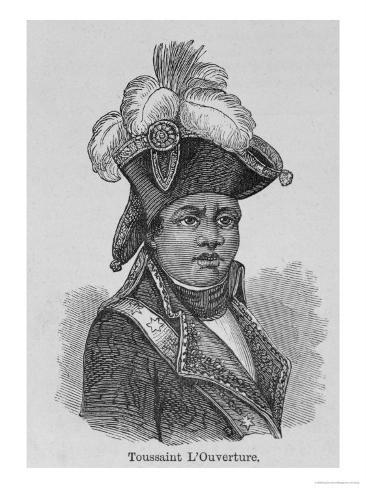
The Story of Toussaint Louverture: An Exquiste Leader

Toussaint Louverture


In today's world, there are countless leaders who serve as people who are able to help and guide others. A great leader in today's world is Mary Jane Roche, who is a previous dancer at J and D Dance Academy in Reading.  She is confident and is always willing to lead and help others when they need it. Additionally, Mary Jane is a friendly, honest, and compassionate person who is always willing to provide help for older or younger girls at J and D. Because she is  older than most dancers, she is able to help others because she has had a lot of previous experience. She is not an "official leader", but from what she has shown, she depicts qualities of a good, confident leader . Relating to Mary Jane, there have been exquisite leaders in past events of history as well. Although there are many, Toussaint Louverture’s leadership position is one of the most well remembered. However, in order to begin the story of Toussaint Louverture, it is essential to discuss geography and places that pertained to Louverture’s role as a thriving leader. In 1492, Christopher Columbus landed on the caribbean island of Hispaniola and two centuries later, the French took control of the western half of Hispaniola, and renamed it Saint Domingue. Although staying “Saint Domingue” for many years, in 1804, the island was renamed Haiti. Under French control, Saint Domingue was a very economically valuable island. By the 1700s, its eight thousand plantations were producing forty percent of the worlds sugar and more than half of the worlds coffee. The plantations were worked on by thousands of slaves, who were owned by white planters. Planters were rich, white owners of slaves, however some were mixed race as well. In the summer of 1789, news of the French Revolution swept across the land. After whites refused to end slavery in Saint Domingue, thousands of plantations were burned and thousands of whites and mixed race people were killed. During this  revolution, Toussaint Louverture emerged as a leader. As a former slave, Toussaint knew what is was like to be under the conditions that slaves suffered. Therefore, although he was no longer a slave, he encourage present slaves to fight for their freedom.Commanding a rebel army of about 4,000 troops against the French, he planned to fight against them. However, in 1794, the revolutionary government in France abolished all slavery in the French colonies, so Toussaint immediately sided with the French. Although this did occur, it did not last long, because Napoleon Bonaparte had risen to power in France and Toussaint feared that Napoleon was going to reinstate slavery. In other words, it was feared that he was going to restore slavery.Appointed commander-in-chief of the army, Toussaint was considered the most powerful person on the island. Toussaint Louverture should be remembered as an outstanding liberator of slaves, military commander, and ruler of Saint Domingue. Although Toussaint was an accomplished ruler and military commander, looking at his life events, he was most importantly a liberator of slaves. Toussaint was formerly a slave, and withheld strong personal views on abolishing slavery.Additionally, Toussaint had a deeper connection with slavery, making it one of his top priorities to end it indefinitely.


In 1789, the French Revolution occurred, and this infamous event triggered the later slave revolution in Saint Domingue. Shown in a timeline created by various sources, it is evident that Toussaint Louverture had an immense impact on thousands of slaves in Saint Domingue. In 1791, a slave revolt began in the north of Saint Domingue, and “Toussaint joins the revolution and serves as doctor to his troops” (Document A). This clearly shows that Toussaint cared very much about his slave soldiers, and he was willing to do anything for his men. Toussaint’s goal was to abolish slavery, and commanding a small detachment of slave soldiers would allow him to achieve this goal. As leader of the Haitian Revolution that erupted, Toussaint trained his soldiers in both Guerilla tactics and European Style fighting. Guerilla tactics were fast paced and were most often a surprise to the opponent. On the other hand, European Style was known as true marching, shoulder to shoulder. Toussaint trained his soldiers in both ways, this is because, the opponent would be thrown off guard if Toussaints troops would use a type of fighting that they weren't use it. Advocating for slaves and their freedom was very important to Toussaint. All the armies that he rallied together were for the sole purpose of moving toward the goal of abolishing slavery. One of Toussaint’s biggests fears revolved around the new conservative government. In Saint Domingue, people feared that this new government was going to reinstate slavery. In response to this, Toussaint decides to write a letter to the French government, simply because he is angry that slavery may be restored.However, in Toussaint’s opinion, it would be impossible to restore slavery in Saint Domingue. This is because, the people have already achieved freedom. As Toussaint describes, “Could men who have once enjoyed the benefits of liberty look calmly while it taken from them!” (Document B). Included in the letter, there is also a threat to the French government, as Toussaint explains, “We have known how to confront danger to our liberty, and we will know how to confront death to preserve it”(Document B). This threat shows that Toussaint Louverture cared very much about abolishing slavery, and his work as a liberator of slaves was undoubtedly very important to him. He believed that it was his destiny to keep the slaves free. In 1801,Toussaint Louverture created a constitution for Saint Domingue. Included in the constitution, Toussaint explains that, “There cannot exist slaves in this territory, servitude is therein forever abolished. All men are born, live, and die free and French” (Document C). Toussaint was a committed abolitionist and he did not want any slavery on the island. Also, Toussaint explains that each cultivator and worker should be treated like family, not like a slave. This constitution shows that he was very serious about keeping slavery off of Saint Domingue and he worked hard to get this across to all people. According to Toussaint’s Constitution, it is evident that his work as an abolitionist was most important, even though he was the prime mover behind the constitution. This constitution of 1801 was just one step closer in his fight for abolishing slavery indefinitely If Toussaint Louverture did not exist, slavery may still exist in Saint Domingue today (Haiti). Toussaint wasn’t just a liberator of slaves, he also was a successful ruler. Toussaint Louverture took control of Saint Domingue and worked hard as a leader to make sure the island was victorious and free of slavery.


Aside from liberator of slaves, Toussaint Louverture should most definitely be remembered as as an excellent ruler of Saint Domingue. In 1801, Toussaint was the prime mover behind the constitution. Signed by Louverture in 1801, the constitution addresses the inhabitants, culture, economy, and government of Saint Domingue. Article 28 of the constitution states, “The constitution nominate citizen Toussaint Louverture, Chief General of the army of Saint Domingue and….he is entrusted the direction thereof for the remainder of his glorious life.” (Document C). Being an exquisite ruler, the fact that he is promised leadership for life is a positive thing, and this shows that the people of Saint Domingue believed that he was a good person and leader who would be able to effectively lead the island. Even though there are some disadvantages to him becoming leader for life, he is a smart leader, which overrides all. Basically, the constitution lays down the law for what Saint Domingue must abide by. It is described in the constitution that Toussaint will not have any slavery on the island and how he believes that all cultivators should be treated like family, not as slaves. This constitution shows Toussaint’s role as a ruler and his authority over the island. A few months after signing the constitution, Toussaint then creates a proclamation, which further depicts his authority and the laws of Saint Domingue. Compared to the Constitution signed four months earlier, the proclamation is much more strict and serious, because the Constitution was not working out well. In making this proclamation, Toussaint Louverture’s goal was to maintain order and notify everyone of the laws. In the proclamation, Toussaint describes the consequences of certain crimes. A vagabond cultivator who is supposed to be working, but isn’t, faces the chances of getting arrested. In addition, any manager of a plantation who has an outside worker taking refuge in their plantation faces up to one week in prison. As Toussaint describes, “Any manager or driver of a plantation upon which a foreign cultivator shall have taken refuge shall denounce him to the captain or commander of the section within 24 hours under penalty of one week in prison.” (Document D). He also explains that a worker who isn’t working, known as a vagabond cultivator, should be immediately be arrested. This Proclamation of 1801 demonstrates Toussaint’s authority, and shows the people of Saint Domingue who is in charge. Additionally, both the Constitution and Proclamation show that Toussaint wanted everything to be orderly and non-violent. However, Toussaint was not just a ruler, but also an exquisite military commander.


    Military commander was one of the most important attributes of Toussaint Louverture, as he cared very much about his army and was always willing to fight for what he believed was right. Even though for the most part, Toussaint was a smart and positive leader, he did have some flaws. Toussaint did not rule without resistance from the citizens of Saint Domingue, or even his own nephew. Toussaint’s nephew, Hyacinthe Moyse, believed that Toussaint was wrong to support plantation farming. Because of this, Moyse organized a rebellion against Toussaint. It was just Moyse who did not agree with Toussaint, but also a lot of former slaves as well. The former slaves did not like that their day to day lives haven’t changed. Even though they weren't slaves anymore, they still had to work like  they were. This deeply angered them. Moyse and other former slaves distrusted Toussaint because he had a good, but suspicious relationship with white planters. Moyse’s revolt occurred on October 29th, 1801, and “whites were massacred from Fort Liberte to the gates of Cap Francis” (Document E). Upon hearing of this revolt, Toussaint was enraged and he order some of his men to fight and kill Moye’s soldiers. In doing this, Toussaint did not focus on the real problem at hand, that former slaves did not want to work on large scale plantations. Instead of murdering plantation owners and  fighting back, Toussaint should have just took Moyse out of power. This event shows Toussaint as a military commander, but not a good one. Although this revolt did show Toussaint from a negative standpoint, he also possessed a lot of qualities that helped him gain his soldiers confidence and respect. As William Wells Brown describes,  “Toussaint, by his superior knowledge of this character of his race, his humanity, generosity, and courage, had gained the confidence of all whom he had under his command”. (Document F). In 1801, Napoleon was determined to take control of Saint Domingue again, and it was rumored that the French were coming to the port city of Samana. Upon coming, Napoleon hoped to reinstate slavery. In response to this, Toussaint decides to burn down Samana so that Napoleon would not be able to have access to it or reinstate slavery. Toussaint’s army then moved to the mountains, so that when the French arrived they could use guerilla tactics on them. This is a very smart decision, because the French are not familiar with guerilla tactics, so therefore they would be unprepared. This shows that Toussaint was an intelligent military commander who knew what he was doing, and was able to effectively lead his soldiers to victory.


Although Toussaint Louverture should be remembered for being a military commander as well ruler of Saint Domingue, it is clear that his his role as liberator of slaves should be most greatly remembered . Without him, the slaves wouldn’t have worked so hard for their freedom,and Haiti most likely would have never regained their independence. Though he did have a few flaws during his role as a leader, his knowledge, generosity, and couraged overruled his negative aspects. He was not always gentle with his methods, but he always knew what he was doing. Having been a previous young slave, Toussaint understood  how the slaves felt, and his deeper connection with slavery encouraged him to help all. Throughout the 18th and 19th centuries, Toussaint served as an excellent leader, making him someone to remember.


Link for photo: http://imgc.artprintimages.com/images/art-print/toussaint-l-ouverture_i-G-29-2929-JH6RD00Z.jpg


Bibliography:

Document A: Created from various sources.
Document B: Toussaint Louverture, "Letter to the French Directory, November 1797."
Document C: The Saint Domingue Constitution of 1801. Signed by Toussaint Louverture in July 1801.
Document D: Toussaint Louverture, “Proclamation, 25 November 1801.”
Document E:Madison Smartt Bell, Toussaint Louverture: A Bibliography, 2007.
Document F: William Wells Brown, “A Description of Toussaint Louverture,” from The Black Man, His Antecedents, His Genius, and His Achievements, 2nd edition, 1863. Engraving of Toussaint Louverture, 1802.


Monday, November 10, 2014

19th Century Survey Monkey: Revolutions and more!


Revolutions in France: 1830 and 1848
http://lhswildcats.org/content/must-know-maps


Moving deeper into learning about the Atlantic Revolutions, we started discussing the revolutions of 1830 and 1848. In class, we worked in groups researching our specific revolution and providing important info to share with the rest of the class. The revolutions include, the Decembrist Revolt, 1830 France, 1848 France, 1848 Frankfurt Assembly, and 1848 Hungary. The essential question we were told to keep in mind throughout the lesson was, "Were the Revolutions of 1830 and 1848 really failures as many historians have concluded?" This question guided us through the lesson and gave us something to think about while researching our revolutions. To get started, we analyzed a map of the revolutions of 1830 and 1848. This map gave me a clear idea of how revolution was spreading everywhere, and how it was not stopped. Every time a revolution was suppressed, another one popped up somewhere else. Alexis de Tocqueville once said, "We are sleeping on a volcano. Do you not see that Earth trembles anew? A wind of revolution blows, a storm is on the horizon." This map clearly demonstrates Alexis' comment on the spread of revolution during the 19th century. Below, I have provided a map that depicts the revolutions of that time period. In addition, we also created a scale for measuring the success/failure of a social/political  revolution. In my group, we decided that a failure means that no change has occurred and the goals for revolution haven't been reached. We described a success as all goals are reached and have been fulfilled. In total, the scale included 5 points along the continuum. ­Klemens von Metternich once said, " When France sneezes, Europe catches a cold." The eruption most likely started in France because not only has France already experience a revolt, but France was also one of the most influential countries of the 19th century. If France experienced a revolution or some other societal unrest, then the rest of Europe would feel the effects as well. After a little bit of analyzing, each group was assigned a revolution. My group studied the revolution of 1830 France and to start off we pulled out the basic information on the revolution. This helped us get a concrete idea of 1830 France. After getting our chart approved by Ms. Gallagher, we analyzed the primary sources and decided whether they were , goals , opponent, or outcome. Pulling out quotes and providing sourcing information was also included in this process. Lastly, using our scale, we decided whether or not the revolution of 1830 France was a success or a failure and explained our choice. Creating our Survey Monkey was the last part of this lesson, where we educated the rest of the class on our revolution. Each group created an analytical quiz on their revolution and then the rest of class took it. This gave the chance for each person to become educated on the many revolutions discussed.


July 25th, 1830 was the day when the Revolution of 1830 France started. The liberals wanted to extend suffrage, the right to vote in political elections, and a win a share of power for the middle class elections (since this was obviously lacking). In terms of goals for liberals, they wanted a government who recognized the rights of humanity and the basic human rights of people. The Ultra Royalists were the opponents in this situation, they were  the king's supporters and  despised constitutional government and wanted to restore the old regime. The Ultra Royalists included many high clergy and émigré nobles who had returned to France in the years after the revolution. After King Louis XVIII died, Charles X inherited the throne. To the liberals dismay, Charles X did exactly the opposite of what they wanted. In response to this, "In Paris, angry citizens threw up barricades across the narrow streets. From behind them, they fired on the soldiers and pelted them with stones and roof tiles. Within days, rebels controlled Paris". Looking at a primary source, it is described that, "Charles X can no longer return to Paris; he has caused the blood of the people to flow."( Theirs, Adolphe.2 “Orleanist Manifesto.”  July 30, 1830. In Laurisse and Rambaud, Histoire Genrale, 287-288) Frightened, Charles X fled to England, showing that he could not control the liberals. As a result of this, the Chamber of Deputies chose Louis Philippe, "The Citizen King", and really he did not fulfill the wants of the liberals, even though he did get along well with them. Although he did say, "The Chambers are about to convene and will deliberate upon the means to assure the reign of the laws and the maintenance of the rights of the nation."(Proclamation by Louis Philippe, August 1, 1830.  In Moniteur, August 2, 1830). Despite this, the goals were not reached for anyone but the upper class. Louis Philippe did not establish rights for ALL people. Not as many things were achieved as intended, showing that this revolution was moderately successful. Yes, goals were reached for upper class, but not for everyone. The king was not chosen fairly, he was a cousin of Charles X. Louis XVII's reign only allowed for the upper class to prosper, thus angering the middle class. Now, these are merely just the basic, concrete facts of the revolution. However, they are important to the understanding of the revolution as a whole.


There is a lot to consider when answering the question, "Were the revolutions of 1830 of 1848 really failures as many historians concluded. Besides the French Revolution of 1830, there are many other revolutions to take into account when answering this question. Knowing that this question can be debated, I thought that I would give my opinion on the matter. In my opinion, I do believe that the revolutions of 1830 and 1848 were a failure as a whole. Most of the revolutions were not complete failures, but they weren't total successes either. I feel as though this says a lot. The French Revolution of 1848 had many positive aspects, such as the gain of the Second Empire, which over 90% of people supported. However, that second empire was soon abolished. It is described that, " In time, however, Napoleon III would embark on foreign adventures that would bring down his empire and end French leadership in Europe"(background essay). Even though the second empire was created, it soon was ended, showing that no real progress was made. Additionally, the Frankfurt assembly was quite a failure. The Prussian king did not accept an offer made a the assembly. The King describes that, "I am not able to return a favorable reply to the offer of a crown on the part of the German National Assembly [meeting in Frankfurt], because the Assembly has not the right, without the consent of the German governments..."(Friedrich Wilhelm IV, King of Prussia: Proclamation of 1849). Because the offer came from the people and not the German people, he would not accept it. This crushed any hopes that Germany had. As a result of this, the assembly was dissolved and in the end hundreds of people were killed. Lastly, the Hungary revolt of 1848 was not totally a failure, but is was not a success either. In Budapest, Hungarian nationalists demanded an independent government, an end to serfdom, and a written constitution to protect their rights, Although the Austrian government agreed to these reforms, but they were temporary. Austrian forces took over the rebels and many were imprisoned or killed. So, although there was a bit of gain, there was also a lot of loss. Looking at these three specific revolutions, I feel like they were collectively all failures. So, to wrap things up, I agree with what historians have concluded.


Survey Monkey Part 1: https://www.surveymonkey.com/s/ZB6673Z
Survey Monkey Part 2:https://www.surveymonkey.com/s/ZB6673

 
Below, I have provided some screenshots of my Survey Monkey. Judging from the results, it is evident that most students correctly answered the questions. We provided eleven questions on the French Revolution of 1830.